
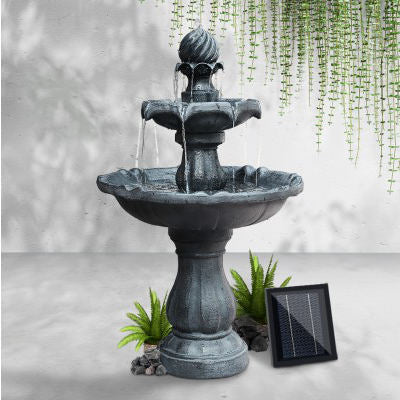
Solar-powered fountains are a fantastic addition to any garden or outdoor space, providing both aesthetic appeal and a sustainable way to enjoy water features. However, it’s essential to understand how the solar panels that power these fountains work and why they might not support high-powered fountain systems. In this blog post, we’ll delve into the workings of solar panels and explain why they place limits on the power of solar-powered fountains.
How Do Solar Panels Work?
Solar panels, also known as photovoltaic (PV) panels, convert sunlight into electrical energy through a process known as the photovoltaic effect. Here’s a simplified breakdown of how they work:
- Photovoltaic Cells: Solar panels are made up of numerous photovoltaic cells, typically composed of silicon. When sunlight hits these cells, it excites the electrons in the silicon, generating an electric current.
- Electric Current Generation: The excited electrons flow through the silicon cells, creating a direct current (DC). This current is then captured and directed through wiring within the solar panel.
- Inverter Conversion: If necessary, the DC electricity can be converted to alternating current (AC) using an inverter. However, for most small solar-powered fountains, the direct current is used directly.
- Power Output: The amount of electrical power generated by a solar panel depends on several factors, including the size of the panel, the intensity of sunlight, and the angle of the panel relative to the sun.
Why Solar Panels Limit Fountain Power
While solar panels are efficient at converting sunlight into electricity, they have certain limitations that impact the power they can provide to a fountain. Here’s why:
- Limited Power Output: Solar panels have a maximum power output that is determined by their size and efficiency. Most small solar panels used in decorative fountains produce relatively low amounts of power, sufficient for small pumps and LED lights but not for high-powered water features.
- Sunlight Dependence: The power generated by solar panels is directly related to the amount of sunlight they receive. In conditions of low sunlight or on cloudy days, the power output decreases, limiting the performance of the fountain. High-powered fountains require a steady and substantial power supply, which solar panels may struggle to provide under less-than-ideal conditions.
- Power Storage: Most solar-powered fountains do not include batteries for storing excess energy. Without a battery system, the fountain can only operate when there is sufficient sunlight. Even if a system had a battery, the energy storage capacity might not be enough to power a large fountain for extended periods.
- Energy Efficiency: Solar panels are designed to be energy-efficient but are not capable of producing the same amount of power as traditional electricity sources. High-powered fountains demand more energy than what a typical solar panel setup can supply. This makes it challenging for solar-powered fountains to support features such as high-pressure jets or large cascading water displays.
Selecting the Right Fountain for Solar Power
When choosing a solar-powered fountain, consider the following:
- Power Requirements: Match the power requirements of the fountain to the capacity of the solar panel system. Small, decorative fountains with lower power needs are ideal for solar setups.
- Sunlight Exposure: Ensure that the fountain’s solar panel will receive ample direct sunlight throughout the day for optimal performance.
- System Components: Look for fountains with integrated solar panels designed to work efficiently with the power output of the panel. Some systems might include a small battery to store energy, which can help improve performance.
- Maintenance: Regular maintenance of the solar panels and fountain system can help maximize efficiency and extend the lifespan of the setup.
Conclusion
Solar-powered fountains offer a charming and eco-friendly option for enhancing your outdoor space. Understanding the limitations of solar panels, particularly their power output and dependence on sunlight, is crucial for choosing a fountain that meets your needs. By selecting the right type of fountain and ensuring proper maintenance, you can enjoy the beauty of a solar-powered water feature while respecting the capabilities of solar technology.
We hope this guide helps you better understand solar-powered fountains and make informed choices for your garden. If you have any questions or need further assistance, feel free to reach out—happy to help!